7 Best Slim Frame Aluminum Sliding Doors for Buyers
Choosing the right sliding door can change how a room feels, performs, and connects with the outdoors. This guide examines seven of the best Slim frame aluminum sliding doors for buyers who value clean lines and practical performance. Large glass panels can bring daylight across a dark living room. However, attractive product photos rarely reveal every important detail.
Each option is assessed through real buying considerations, including frame strength, thermal performance, glass configuration, hardware quality, and installation support. Smooth rollers matter when moving a heavy panel every day. Drainage design matters after a night of heavy rain. A narrow frame also reduces visual obstruction, but it may limit structural flexibility in wider openings. Buyers should confirm maximum panel sizes, glazing specifications, corrosion resistance, and warranty coverage before ordering.
No single door suits every project. A coastal home may need stronger protection against salt exposure. A cold climate may require better insulation than a mild region. Installation accuracy can influence air sealing as much as the door itself. That detail is easy to underestimate. The following review combines manufacturer information with practical evaluation points, helping readers compare appearance, durability, maintenance, and long-term value. Some rankings remain subjective, because budget, wall structure, and personal priorities can change the result. Careful measurements and advice from a qualified installer should guide the final decision.
Define Slim-Frame Aluminum Sliding Doors and Key NFRC Energy Ratings
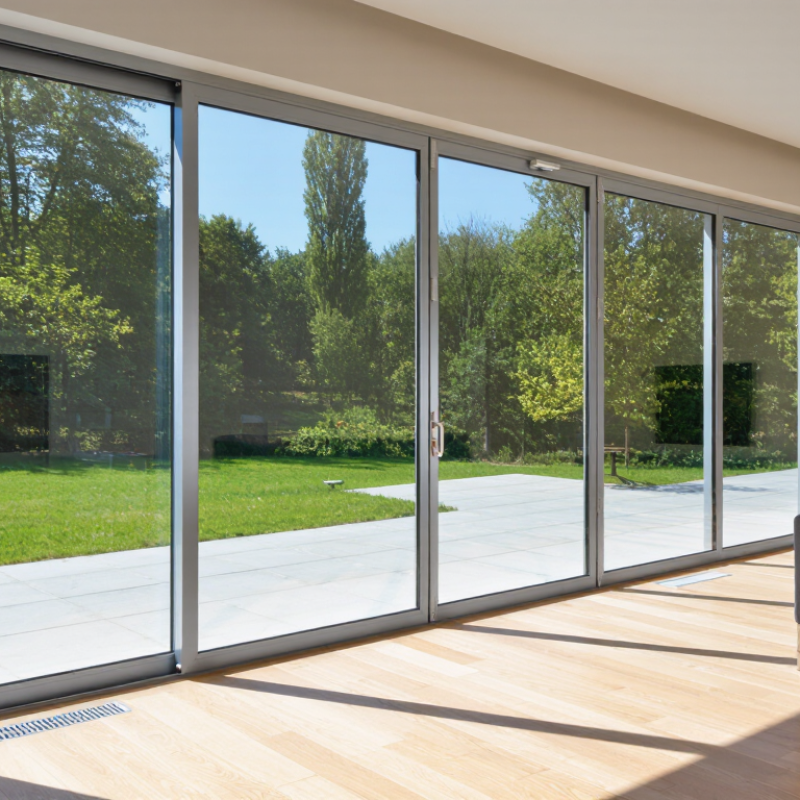
Slim-frame aluminum sliding doors use narrow metal profiles around large glass panels. The slimmer sightlines can make a room feel brighter and keep views less obstructed. Aluminum is strong, but it conducts heat readily. A thermal break—a nonmetallic barrier within the frame—helps reduce heat transfer. Glazing, edge spacers, and installation also affect comfort. The frame alone tells little.
Check the NFRC label for the complete door configuration. NFRC, the National Fenestration Rating Council, provides standardized ratings that help buyers compare products. U-factor measures heat transfer; a lower value generally means better insulation. Solar heat gain coefficient, or SHGC, measures how much solar heat enters. Lower SHGC can help limit summer heat, while higher values may suit colder, sunnier locations. Visible transmittance indicates how much daylight passes through; higher values mean more light. Small details matter.
Compare matching sizes and glass options, not just headline numbers. Ratings don’t predict every room’s comfort. Shade, orientation, weather, and installation matter too. A sunny west-facing opening may need a different SHGC than a shaded patio door. It’s easy to overlook the sill and seals, yet poor installation can invite drafts or water. Read the label, then ask how the tested configuration matches the door you plan to buy.
Compare 7 Door Systems by Sightline, Panel Size, and Opening Style
A two-panel slider keeps the meeting stile simple, but only one panel usually moves. A three-panel system can open a wider section while retaining a fixed panel. Four-panel layouts suit broad walls, though their central meeting rails interrupt the view. For slimmer sightlines, compare the frame and interlock dimensions in the shop drawings; “slim frame” alone does not define the visible glass area.
A pocket slider disappears into the wall, creating a clear opening but requiring space for the panels and careful coordination. Multi-track systems stack several moving panels, so they can create large openings with more frame lines. Lift-slide doors use a raised, rolling panel and often handle heavier glazing; ask for tested maximum panel dimensions. A corner system can open two adjoining sides, but its corner detail may add structure. The U.S. Department of Energy’s Energy Saver guidance estimates that windows account for 25–30% of residential heating and cooling energy use, so compare each system’s NFRC-rated U-factor and solar heat gain coefficient, not sightline alone.
Tips: Request elevations showing the actual sightline, panel widths, and clear opening. Check the sill height against your floor finish. A wider opening can feel dramatic, but the operating effort and frame stack may disappoint in daily use.
Use DOE’s 25–30% Window Energy-Use Estimate to Assess Efficiency
DOE estimates that windows account for about 25–30% of home heating and cooling energy use. That figure is a broad estimate, not a promise about any single sliding door. Still, it shows why a large glass opening deserves close attention. Slim aluminum frames can brighten a room, but a narrow profile alone does not indicate strong insulation. Looks can mislead.
When comparing slim-frame aluminum sliding doors, check the whole assembly: glass, frame, seals, and installation. A thermally broken frame separates interior and exterior aluminum, reducing heat transfer. Low-emissivity double glazing can also limit unwanted heat flow; the right solar-control coating depends on climate and orientation. Review the published U-factor and solar heat gain coefficient, rather than relying on phrases such as “energy efficient.” These values help compare products under consistent test conditions.
Air leakage matters too. On a windy evening, a poorly adjusted panel may feel cold near the latch, even when its glass performs well. Ask how the door is tested and whether the installer will seal the sill and perimeter. Track drainage, threshold height, and weather seals deserve attention; small gaps can undo careful glazing choices. I would not treat the DOE percentage as a forecast for your bill. Shade, heating equipment, local weather, and door use all change the result.
Check NFRC U-Factor and SHGC Alongside AAMA/WDMA/CSA A440 Ratings
When comparing seven slim-frame aluminum sliding doors, look beyond the narrow sightlines. Read the NFRC label for whole-product U-factor and SHGC. A lower U-factor generally means less heat transfer; SHGC indicates how much solar heat enters. The right SHGC depends on climate, orientation, and shading. The U.S. Department of Energy’s Energy Saver guidance estimates that window heat gain and loss account for 25–30% of residential heating and cooling energy use. Small differences matter.
Check the AAMA/WDMA/CSA A440 rating as well. This standard evaluates air leakage, water penetration, and structural performance. Match the stated performance grade to your local weather and building exposure, then verify the tested door size and configuration. A rating is useful, but it does not guarantee identical performance in every installation. That part is easy to overlook.
Tips: Compare labels side by side. Ask for the NFRC-certified values and the A440 test documentation, not just a sales description. Inspect the sill, weatherstripping, and corner seals; tiny gaps can undermine a strong rating. I would not choose by the lowest U-factor alone. Check whether the SHGC suits the room’s sunlight, too.
Verify Durability with AAMA 2605 and ASTM E283, E547, and E330 Tests
Slim-frame aluminum sliding doors leave less visible material around the glass, so buyers should check performance evidence, not appearance alone. Ask for test reports covering the same frame, glass, hardware, and operating configuration you plan to purchase. Small changes matter. A larger panel or different lock can affect results.
AAMA 2605 addresses the performance of high-grade organic coatings on architectural aluminum. Review the finish specification and supporting test records for weathering and corrosion resistance; this standard does not certify the whole door. ASTM E283 measures air leakage through a specimen under a stated pressure difference. ASTM E547 evaluates water penetration during cyclic pressure testing, while ASTM E330 assesses structural performance under uniform static air pressure. Check the tested pressure, specimen dimensions, and pass criteria. Numbers without context tell little.
Request complete reports, including laboratory details and any limitations. A door may pass testing in a controlled setup yet perform poorly if installed out of square or sealed badly. That gap is easy to underestimate. Compare the tested assembly with your opening size, exposure, and installation method, and ask what was not tested.