
Natural beauty for your favorite space
How to Find a Reliable China OSB Supplier in 2026?
Finding a reliable China OSB Supplier in 2026 takes more than comparing prices. Buyers need evidence that panels match the stated grade, thickness, and intended use. FAO’s Forest Products Yearbook and the UNECE/FAO Forest Products Annual Market Review provide useful context on wood-panel production and trade. They help buyers understand market movement, but they cannot verify an individual factory’s quality.
Technical checks matter. USDA Forest Products Laboratory guidance explains how wood structure and manufacturing affect panel performance. Researcher Dr. Robert J. Ross’s wood-engineering work is a useful reminder to assess the material, not just the sales claim. A practical buyer’s rule: “Verify the panel, not the promise.” This is a sourcing principle, not a direct quotation from Ross.
Ask for current product specifications, test reports, and traceable batch records. Then compare them with a sample from the same production line. Look closely at the panel edges, thickness consistency, surface bonding, and packaging labels. Request a video walkthrough of the press line and warehouse, but treat it as supporting evidence—not proof. A polished showroom can hide gaps. So can a convincing PDF.
The details reveal more. Check whether the supplier explains test methods, tolerances, and corrective actions clearly. Confirm that reports identify the tested product and issuing laboratory. Independent inspection before shipment can reduce surprises, especially for repeat orders. No single certificate settles everything. This guide outlines a practical way to assess suppliers, verify claims, and make a more confident sourcing decision.
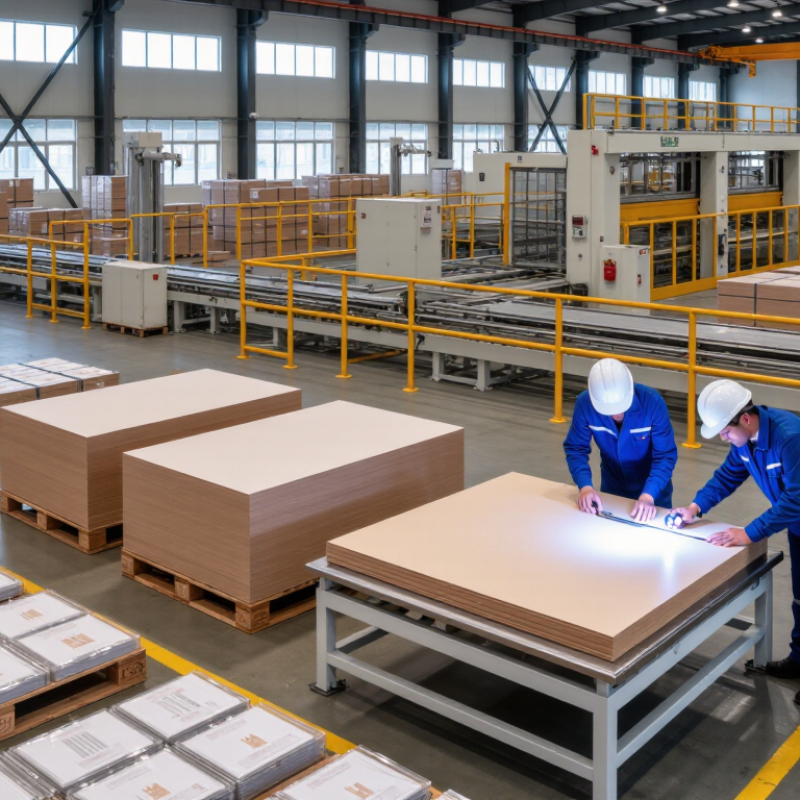
Define the Required OSB Use and Match It to EN 300’s Four Classes
Before requesting quotes, define where the board will work: a dry interior wall, a floor, or a roof exposed to humid conditions. EN 300 separates OSB into four classes. OSB/1 is for non-load-bearing use in dry conditions; OSB/2 is load-bearing in dry conditions. OSB/3 is load-bearing in humid conditions, while OSB/4 is for heavy-duty load-bearing use in humid conditions. These categories describe intended performance, not a guarantee that every panel suits every project.
Match the class to the actual exposure, then confirm thickness, span, edge support, and declared performance with the supplier. A roof deck beneath a sound weatherproof layer may face different conditions from a panel left exposed during construction. The USDA Forest Products Laboratory’s Wood Handbook (2021) explains that moisture changes affect wood and wood-based panels; storage and site protection matter, too. I have seen buyers focus on class alone. That can miss a poor fit in thickness or installation details. Ask for current test documentation identifying the product, class, and applicable EN 300 requirements.
Tips: Request samples and technical sheets for the exact panel being quoted. Check markings and batch documents, not just a catalogue screenshot. Ask how boards are protected from rain during transport. Small checks help. Not glamorous, but useful.
Verify Formaldehyde Emissions Against the E1 Limit of 0.124 mg/m³
When assessing a China OSB supplier, ask for a recent, product-specific formaldehyde test report—not just a certificate or a general claim. The E1 limit is 0.124 mg/m³ when measured using the EN 717-1 chamber method, as referenced in the European wood-based panel standard EN 13986. Check that the report identifies the tested board, thickness, test date, and laboratory. Small details matter.
Compare the result with the limit, but do not treat E1 as a guarantee of every indoor exposure level. The World Health Organization’s Guidelines for Indoor Air Quality: Selected Pollutants set a formaldehyde guideline of 0.1 mg/m³ over 30 minutes. That figure uses a different context from an E1 product classification, so the values should not be presented as directly interchangeable. Ask the supplier to explain the test method and conditions. If the report is old or the tested product differs from your order, request a new test on the same specification.
A useful check is to match the report’s board details against the purchase specification and a production sample. I would not rely on a single passing result alone; production can vary. Independent laboratory testing adds confidence, though it cannot remove every uncertainty. Keep the report and sample records for later comparison.
Check Factory Quality Systems, Traceability, and Batch Testing
A reliable China OSB supplier should show how quality is controlled on the production line, not just present a certificate. Ask to see documented checks for mat forming, press temperature, board thickness, moisture, and edge condition. ISO’s 2022 Survey reported more than 1.2 million ISO 9001 certificates worldwide. That figure reflects widespread quality-system adoption, not the quality of any particular board.
A certificate is only a starting point.
Traceability should connect each sample to a production date, shift, line, and batch number. Request recent batch records and independent test reports covering bending strength, internal bond, and thickness swelling, using relevant methods such as ASTM D1037. Then compare the report’s product grade and thickness with the order specification. Details matter. If the supplier cannot trace a test result back to a specific batch, the paperwork offers limited reassurance. A factory visit can reveal practical gaps, too: are gauges calibrated, and are rejected panels clearly separated? Small inconsistencies are easy to overlook. I would not assume every polished audit document reflects daily practice; verify a fresh batch, and keep the sample reference with your purchase records.
Compare Independent Lab Reports with Samples and Declared Specifications
A reliable China OSB supplier should let test results, delivered samples, and declared specifications agree. The FAO’s Global Forest Products Facts and Figures 2022 reports global wood-based panel production of about 399 million cubic metres that year. That scale makes clear why broad claims such as “water-resistant” are not enough. Ask for a recent report from an independent laboratory accredited to ISO/IEC 17025, and check the tested product’s thickness, grade, and manufacturing site.
Compare the report against the sample and the purchase specification, not just a catalogue. For example, EN 300 sets a maximum 24-hour thickness swelling of 15% for OSB/3 panels. Ask whether the report used that method and whether the tested panel matches the offered grade. Measure sample thickness at several points, inspect cut edges for loose strands, and compare the panel markings with its paperwork. Numbers matter. A report may be genuine yet describe a different product. Request sealed samples from the production lot, then retain one for comparison after delivery. Small gaps between paperwork and panels are easy to overlook. I would still treat one passing sample as evidence, not a guarantee of every shipment.
How to Find a Reliable China OSB Supplier in 2026? — Compare Independent Lab Reports with Samples and Declared Specifications
EN 300 OSB/3 reference requirements for bending properties (N/mm²)
These are standard reference requirements, not test results from a specific supplier. For each offer, check that the declared grade and thickness match the applicable EN 300 requirements, then compare the independent lab report with tests on samples from the same product specification. Requirements can depend on thickness; confirm the relevant standard table and test methods.
Assess Export Documents, Shipping Terms, Lead Times, and Supplier Reliability
A reliable China OSB supplier should provide export documents that match the actual order. Check the commercial invoice, packing list, bill of lading, and certificate details where applicable. Compare product descriptions, quantities, thicknesses, and shipment dates across each document. Small mismatches can delay customs clearance or complicate claims. Ask for sample documents before production, with sensitive commercial information removed. A neat file is not proof by itself.
Shipping terms deserve equal attention. Confirm who arranges freight, pays charges, and carries risk at each stage. Make sure the named port, delivery point, and agreed Incoterms version appear consistently in the contract and quotation. Then test the lead time against real production steps: raw-material preparation, pressing, cooling, packing, and vessel booking. Ask for a written schedule with milestone dates, not only a promised dispatch week. Delays happen. The useful question is how early the supplier reports them.
Reliability shows in communication before the deposit, too. Request recent loading photos, inspection records, and references for comparable export orders. Verify that the supplier can explain thickness tolerance, moisture requirements, and packaging protection for your route. A response that is quick but vague is still a warning. I would not treat one smooth video call as enough; this is an imperfect check, but several consistent records offer a clearer picture. No checklist removes every risk.
