How to Choose French Doors Aluminum for Your Home?
Choosing French Doors Aluminum for your home involves more than comparing colors and glass styles. The right door must suit your climate, wall structure, daily habits, and long-term maintenance expectations. A slim black frame may look striking, but it can perform poorly without a reliable thermal break and proper installation.
Building-science expert Joseph Lstiburek emphasizes, “Control rain, air, vapor, and heat.” This principle applies directly to French Doors Aluminum. Look for insulated frames, low-emissivity glass, weather-resistant seals, and a threshold designed for your local rainfall. In a coastal area, powder-coated aluminum and corrosion-resistant hardware deserve close attention. In colder regions, examine the door’s U-value and air-leakage rating, not just its appearance. Small details matter.
Measure the opening carefully. Check how furniture, curtains, and nearby walls will affect the swing. Hinged doors need clear space. Outward-opening models may face wind pressure and drainage challenges. A multi-point locking system can improve security and reduce drafts, but only when the frame stays square. Installation is not an afterthought. An experienced installer should inspect flashing, sill support, drainage paths, and the connection between the door and surrounding wall.
Be realistic. The most expensive option is not always the best one. A beautiful door can still be wrong. Review warranties, service access, glass replacement terms, and local building requirements before ordering. French Doors Aluminum should combine daylight, durability, and comfortable operation. The final choice may feel less dramatic, but it should open smoothly on an ordinary morning, through changing seasons, for many years.
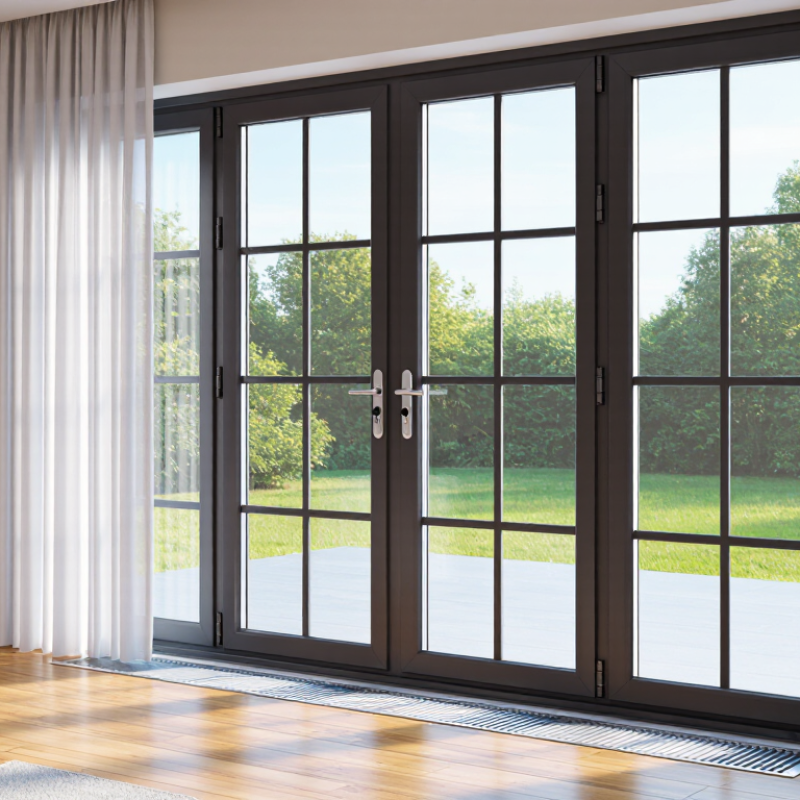
Define Your Home’s Needs for Aluminum French Doors
Choosing aluminum French doors starts with your home's daily behavior, not the frame color.
Measure the rough opening, finished floor, and swing clearance. A door opening into a sofa becomes frustrating quickly. During site checks, I examine sunlight, wind, rain exposure, and foot traffic. South-facing glass may need low-emissivity glazing and exterior shading. Coastal homes require corrosion-resistant finishes and effective drainage. Small details matter. Do you need ventilation, privacy, or a wider moving route?
Measure the rough opening, finished floor, and swing clearance.
Define thermal performance before comparing decorative finishes.
Ask for the tested U-value and solar heat gain data for the complete door system. A thermal break can reduce heat transfer through the aluminum frame. Double glazing suits many homes, while triple glazing may help in colder climates. However, heavier glass can affect hinges, rollers, and installation costs. Do not choose the thinnest frame automatically. Thin profiles look elegant, but they may provide less room for insulation and hardware.
Security should match the home's location and routine.
Consider multipoint locking, laminated glass, strong hinges, and a properly anchored frame. A low threshold can improve accessibility, but it must still control rainwater. Confirm the sill design before installation.
I once focused too much on appearance and overlooked furniture clearance. That mistake made the opening feel smaller than expected.
Request accurate shop drawings, verify the wall condition, and allow space for adjustment after flooring is installed.
Compare Door Configurations, Sizes, and Opening Styles
How to Choose French Doors Aluminum for Your Home?
Start with the opening, not the frame color. A single aluminum door suits narrow patios and smaller rooms. A paired French-door configuration needs more wall space, but it creates a balanced entrance. For a 2.4-meter opening, two 1.2-meter leaves may look generous. However, furniture placement can make that width awkward.
Opening style changes daily comfort. In-swing doors protect exterior hardware, yet they consume interior floor space. Out-swing doors preserve indoor space, but rain exposure and threshold drainage need careful review. Sliding panels work well beside sofas or dining areas. Folding systems provide a wider opening, although their hinges and tracks require more maintenance. I have found that homeowners often choose maximum width first and regret the circulation loss later.
Performance deserves equal attention. The U.S. Department of Energy reports that windows can represent 25–30% of residential heating and cooling energy use. Large glazed doors therefore need suitable low-emissivity glass, weather seals, and thermally improved aluminum frames. Check the NFRC label for U-factor and solar heat gain coefficient. Lower U-factor generally means better insulation. For coastal or wet locations, request corrosion-resistant finishes and confirm drainage details. AAMA/WDMA/CSA 101/I.S.2/A440 testing also helps compare air leakage, water resistance, and structural performance. Specifications can still mislead when installation is poor. A qualified installer should verify the rough opening, sill level, and final operating clearances.
Evaluate Aluminum Grades, Glass, Insulation, and Energy Efficiency
How to Choose French Doors Aluminum for Your Home?
Choosing aluminum French doors requires more than comparing frame colors. The aluminum grade affects strength, corrosion resistance, and long-term stability. For most homes, a properly finished architectural-grade frame offers reliable performance. Check the thermal break inside the frame. It separates indoor and outdoor metal surfaces, reducing heat transfer and condensation around the edges.
Glass deserves equal attention. Double glazing may suit mild climates, while triple glazing can improve comfort in colder regions. Look for a low-emissivity coating, warm-edge spacers, and a suitable gas fill. Review the U-factor for insulation and the solar heat gain coefficient for sunlight control. Lower U-values usually mean better insulation. However, excessive solar protection may make a bright room feel cold. I have seen homeowners focus only on glass thickness and overlook air leakage around the frame. That mistake can weaken real-world efficiency.
Tips: Ask for tested U-factor, SHGC, and air-leakage ratings. Inspect the door sample for smooth seals and firm locking points. Measure the opening carefully, especially in older homes with uneven walls. A professional installer should explain drainage paths and flashing details. Small gaps can create noticeable drafts. Energy labels help, but they cannot replace climate-based judgment. I would also request written maintenance guidance, because finishes can fade and hardware may loosen. No choice is perfect; comfort, budget, sunlight, and local weather must be balanced.
Check Security Features, Weather Resistance, and Maintenance Needs
How to Choose French Doors Aluminum for Your Home?
When choosing aluminum French doors, inspect security details beyond the appearance. A multipoint locking system can engage the frame at several points. Look for reinforced hinges, tamper-resistant cylinders, and laminated or toughened glass. The door should close evenly without forcing the handle. During home inspections, I check whether the frame flexes when pressure is applied. Small movement may signal poor installation or insufficient reinforcement.
Weather resistance matters just as much. Choose doors with continuous weather seals, sloped thresholds, and effective drainage channels. Thermal breaks can reduce cold spots around the frame. Check the product’s air, water, and wind performance where test data is available. Coastal homes need finishes designed for salty moisture. I once underestimated threshold drainage on a renovation, and wind-driven rain later exposed the mistake.
Tips: Ask for written performance data. Run a hand around the closed seals. Inspect drainage holes before installation. Clean tracks with a soft brush, then wipe them dry. Use mild soap on aluminum surfaces, not abrasive cleaners. Check hinges, handles, and locking points twice a year. If the door becomes difficult to operate, do not keep forcing it. A small adjustment may prevent costly frame or hardware damage. Maintenance is simple, but only when ignored details are noticed early.
Review Installation Requirements, Warranty Coverage, and Total Cost
Choosing aluminum French doors starts with the opening, not the finish. Measure width, height, sill depth, and wall condition. Installation instructions should specify rough-opening tolerances, flashing, drainage, and fastener spacing. A level sill is essential; even a small slope can cause leaks or difficult latching. The U.S. Department of Energy estimates that windows can represent 25–30% of household heating and cooling energy use. French doors contain more glass, so compare U-factor and solar heat gain coefficient ratings. NFRC-certified performance data offers a more reliable comparison than showroom claims. Thermally broken aluminum frames are usually worth considering in cold or hot climates.
Tips: Request a site-specific quote. Include removal, reframing, waterproofing, interior trim, disposal, permits, and threshold repairs. Otherwise, the “low” price may change after demolition. Review warranty terms line by line. Frame finish, insulated glass, hardware, and labor may have different coverage periods. Ask whether the warranty transfers to a future homeowner, excludes coastal exposure, or requires approved installation. A short warranty is not automatically poor. Vague wording is the real warning.
The total cost also includes future adjustment and maintenance. Poor drainage can damage flooring before the door itself fails. The 2024 Cost vs. Value report shows that replacement projects can recover substantial value, but returns vary sharply by location and project quality. That is a reminder, not a promise. I would keep written installation photos, product ratings, and invoices. Small details matter.
How to Choose French Doors Aluminum for Your Home?
Typical U.S. planning estimates show how door size and installation complexity can affect the total installed cost of aluminum French doors. Larger or custom openings usually require more labor, structural preparation, flashing, and trim work.
Before ordering, confirm the rough-opening dimensions, sill drainage, weatherproofing details, threshold height, local egress requirements, and whether structural modifications are needed. Limited product warranties commonly cover the door system for approximately 5–10 years, while labor, installation errors, accidental glass damage, and normal wear are often excluded. Always request the warranty terms and a written, itemized installation quote.
Typical non-brand-specific U.S. planning estimates in USD for replacement or renovation projects; actual prices vary by region, finishes, glazing, site conditions, permits, and custom engineering.